
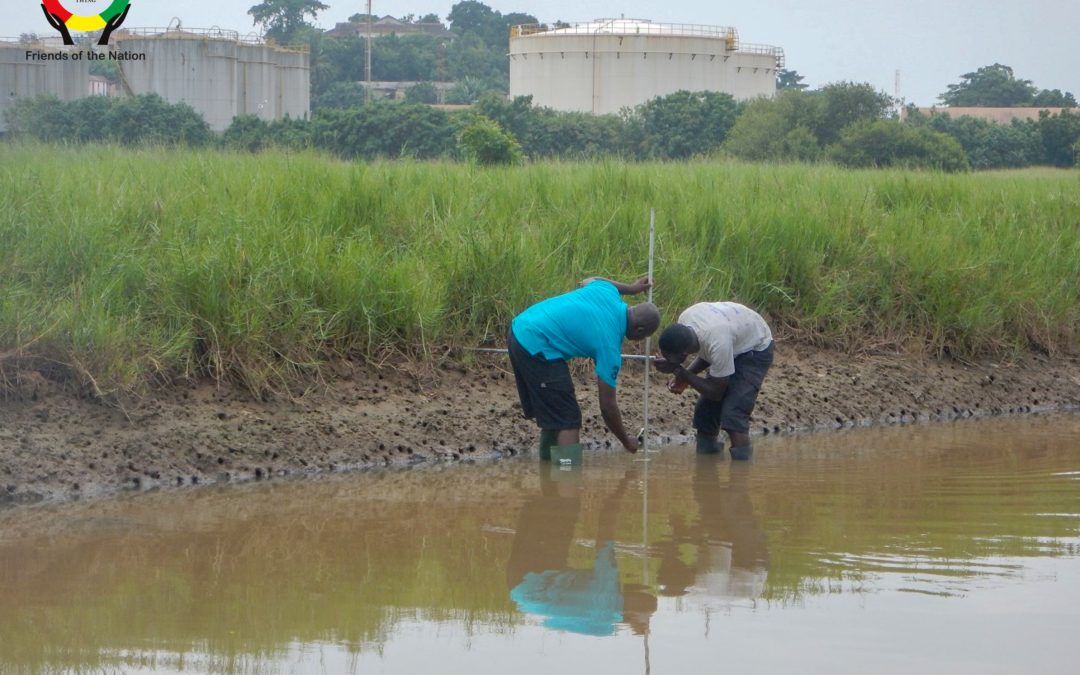
Healthy coastal and marine ecosystems provide food security, protect shorelines, and store carbon. Loss of mangroves, rising bycatch of marine mammals, and marine pollution threaten biodiversity and the resilience of coastal communities.
FoN’s approach & activities
FoN pursues conservation that supports both nature and people by:
- Reducing cetacean bycatch through landing-site monitoring, fisher engagement, and creation of a digital database to inform policy and national reporting.
- Implementing mangrove restoration and conservation (notably at Anlo Wetlands) to rebuild nursery habitats, sequester carbon, and strengthen coastal resilience.
- Tackling coastal plastic pollution and ALDFG (Abandoned, Lost and Discarded Fishing Gear) with the 4Rs campaign; Rethinking, Reducing, Reusing, Recycling; and community cleanups.
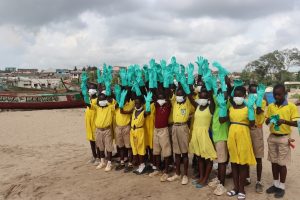 Training children in coastal communities on conservation practices through the citizen science approach.
Key achievements & indicators
- Hectares of mangrove restored and survival rate of planted seedlings.
- Number of cetacean/bycatch incidents recorded and rate of reduction over time.
- Tonnes of marine litter collected and number of ALDFG items removed.
- Community members trained in monitoring and biodiversity-friendly gear use.
Partnerships
We partner with scientific institutions, conservation NGOs, local communities and fishers to blend traditional knowledge with science-based monitoring and to feed data into national reporting mechanisms. 
Call to action
Join mangrove planting days, fund biodiversity monitoring equipment, support community waste-management projects, or adopt a stretch of coastline to keep clean.