
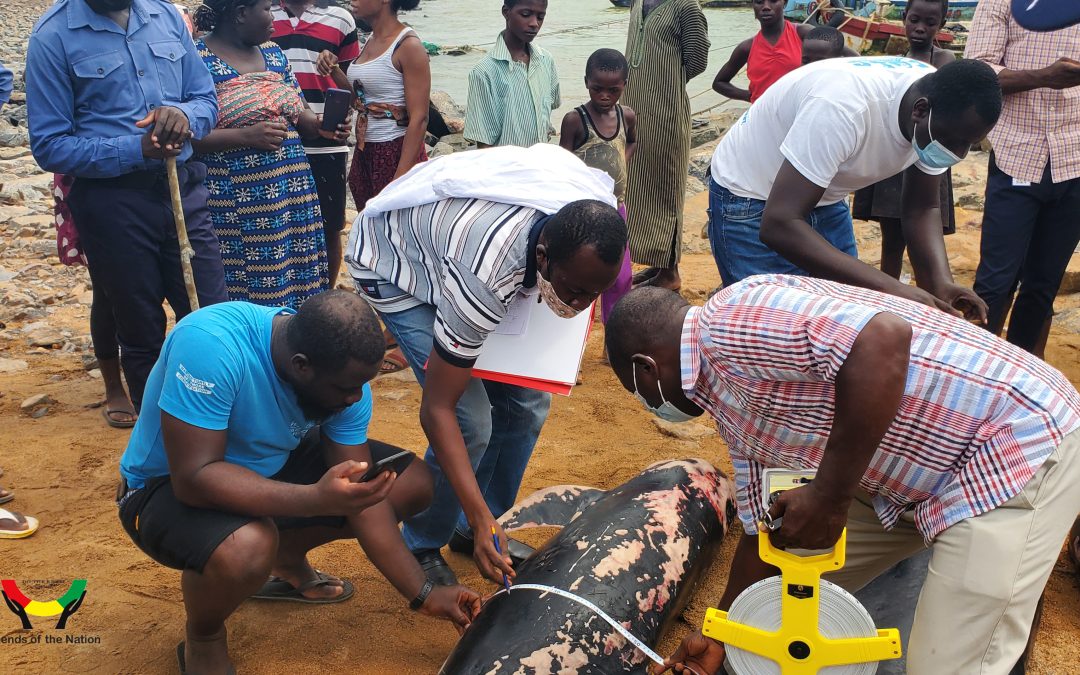
Marine mammals such as dolphins and whales play a vital role in maintaining healthy marine ecosystems. However, in Ghana, these species face growing threats from bycatch, the unintended capture of marine mammals during small-scale fishing operations. Bycatch not only endangers vulnerable species but also undermines biodiversity and the long-term sustainability of Ghana’s fisheries.
Friends of the Nation (FoN) is actively working with coastal communities to track and document marine mammal bycatch as part of our commitment to ocean conservation and sustainable fisheries governance.
Tracking Marine Mammal Bycatch
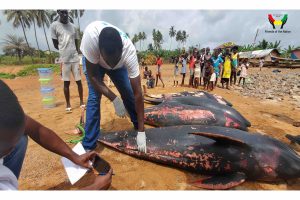 FoN collaborates with small-scale fishers in coastal communities to collect reliable information on marine mammal bycatch. Through community engagement and training, fishers are encouraged to:
-
Report incidents of bycatch when marine mammals are accidentally caught in nets.
-
Share information on the type of gear used, location, and circumstances of each case.
-
Understand the ecological importance of marine mammals and why their protection is vital.
This participatory approach builds trust with fishing communities and helps generate accurate data on the scale of the problem.
Documenting in an Online Database
To ensure transparency and accessibility of information, FoN has developed an online database hosted by the Center for Coastal Management of the University of Cape Coast where records of marine mammal bycatch are documented and regularly updated. This platform:
-
Provides policymakers, researchers, and civil society with evidence-based data.
-
Helps track trends in marine mammal bycatch across Ghana’s coastline.
-
Supports advocacy for stronger marine conservation measures and better fishing practices.
Why This Matters
Marine mammals are indicators of ocean health. Protecting them means safeguarding biodiversity, sustaining fish stocks, and maintaining the balance of marine ecosystems. By systematically tracking and documenting bycatch, FoN is helping Ghana meet its conservation commitments and contribute to global marine biodiversity protection goals.
Our Commitment
FoN remains committed to:
-
Expanding community-based monitoring of marine mammal bycatch.
-
Providing regular data updates through the online database.
-
Advocating for policies and practices that reduce bycatch and protect endangered species.
-
Building partnerships with research institutions and conservation groups to strengthen marine biodiversity protection.
Through these actions, FoN is ensuring that Ghana’s seas are not only productive but also safe havens for marine life, balancing human livelihoods with the health of our oceans.