
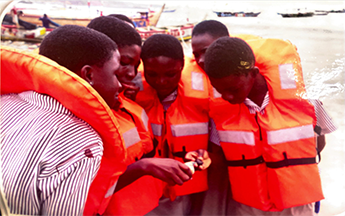
FoN believes that informed citizens make better guardians of the ocean. Ocean literacy goes beyond knowledge; it builds awareness of how marine systems function, what rights and responsibilities communities hold, and which sustainable practices protect both people and nature. When citizens understand the value of coastal and marine resources, they become active participants in governance and protectors of their own coastal assets.
FoN’s Approach & Activities
FoN strengthens community knowledge, leadership, and advocacy through a combination of training, awareness creation, and citizen science. Our work focuses on empowering both youth and adults to take action for the health of their ecosystems.
1. Establishing and Capacitating CEMAGs and SEMAGs
-
We establish Community Environmental & Advocacy Groups (CEMAGs) in coastal towns, and School Environmental & Advocacy Groups (SEMAGs) in basic and secondary schools.
-
These groups are trained and mentored to monitor wetlands, beaches, and ocean health. Training includes:
-
Wetland and mangrove monitoring methods.
-
Sustainable fishing practices and fisheries governance.
-
Waste management and community clean-up techniques.
-
Basic advocacy skills to engage with local authorities and regulators.
-
-
By equipping these groups, FoN builds local leadership structures that sustain environmental action beyond individual projects.
2. Ocean Literacy Education 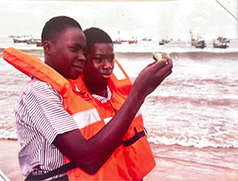
-
We deliver curriculum-aligned ocean literacy sessions in schools, linking classroom lessons to real-life coastal challenges.
-
Hands-on training engages youth in monitoring fish landings, recording beach litter, and identifying mangrove species.
-
Community workshops bring together fishers, processors, and opinion leaders to discuss ocean rights, safe fishing practices, and the economic value of healthy ecosystems.
3. Training in Citizen Science
-
FoN trains CEMAG and SEMAG volunteers to act as citizen scientists, collecting data on coastal and marine issues.
-
Data collected includes:
-
Beach litter surveys and plastics monitoring.
-
Wetland health assessments.
-
Reports on illegal fishing or mangrove cutting.
-
-
These findings are compiled and used in local advocacy, as well as in national reporting systems that inform fisheries and environmental policy.
Community Case Note
In targeted towns such as Engyiresia, New Takoradi and others along Ghana’s coast, CEMAGs now run regular beach transects, recording marine litter and wetland changes. Their observations are submitted to local councils and district assemblies, shifting community conversations from short-term fixes (e.g., beach cleanups) to long-term stewardship (e.g., waste management by-laws, mangrove protection rules).
For example, in Shama District, CEMAG members trained by FoN have helped raise awareness on mangrove replanting along the Pra estuary and provided evidence of destructive harvesting practices, turning citizen monitoring into actionable advocacy.
Key Achievements & Indicators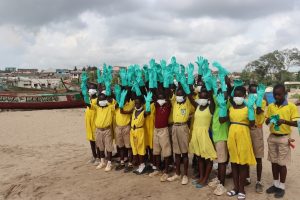
-
CEMAGs and SEMAGs established: Dozens of active groups across coastal towns and schools.
-
People trained: Hundreds of youths, fishers, and community members empowered with practical monitoring and advocacy skills.
-
Data generated: Regular citizen-collected data on ocean health and litter, feeding into local and national platforms.
-
Youth empowerment: High retention of students in SEMAGs, with many going on to explore eco-tourism, mangrove nursery management, and environmental advocacy as livelihoods.
Partnerships
FoN collaborates with:
-
Schools and district education offices: to mainstream ocean literacy in education.
-
Research institutions: to strengthen data collection and analysis.
-
Youth networks and CSOs: to expand advocacy and leadership.
These partnerships ensure that citizen action is not isolated but instead contributes to system-wide improvements in ocean governance.
Call to Action
You can support this movement for ocean justice and community stewardship:
-
Sponsor ocean learning materials for schools and CEMAGs.
-
Volunteer as a mentor for a SEMAG and inspire the next generation of ocean leaders.
-
Integrate ocean literacy into your company CSR, supporting both environmental sustainability and community resilience.
📧 Contact us: info@fonghana.org
Together, we can create a more ocean-literate society where communities are empowered to safeguard marine resources for present and future generations.