
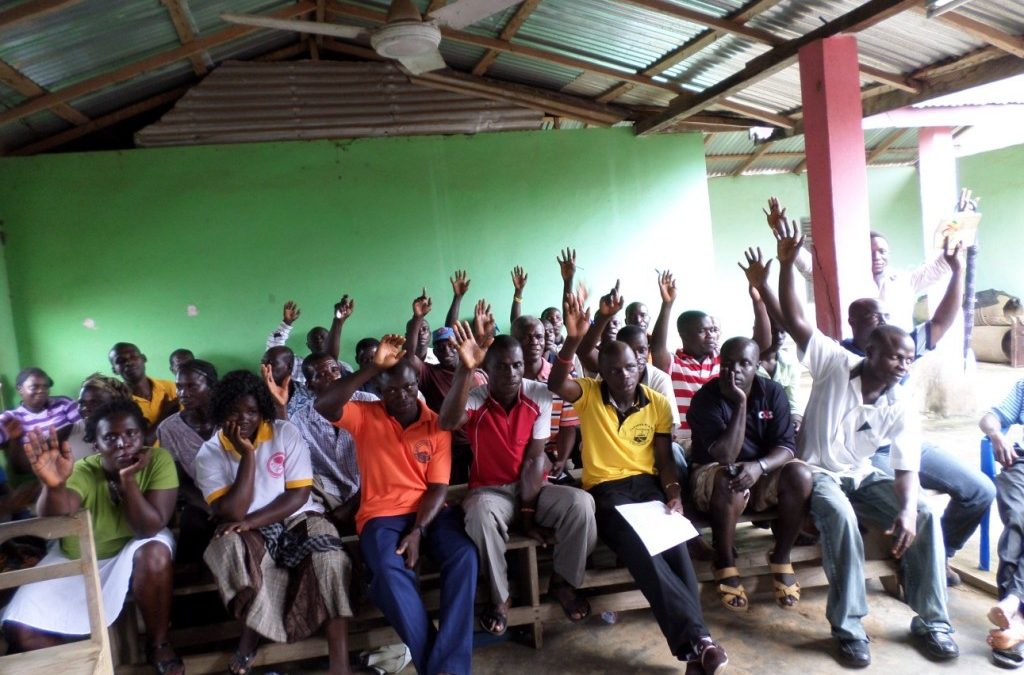
Promoting Citizens’ Engagement in Strengthening Accountability in Ghana.
Across Ghana, citizens continue to face challenges with how public funds are managed and utilized. Reports from the Auditor-General and the Public Accounts Committee of Parliament highlight persistent weaknesses in the country’s financial management systems. At the district level, many District Assemblies struggle with transparency, leaving communities unaware of how resources, such as the District Assemblies Common Fund (DACF), the District Assemblies Common Fund–Response Factor Grant (DACF-RFG), the Minerals Development Fund (MDF), the Annual Budget Funding Amount (ABFA), and timber royalties are spent.
Again, citizen participation is often limited by lack of access to information, weak platforms for engagement, and insufficient capacity to demand accountability from duty-bearers. Yet genuine community involvement is essential for ensuring that public funds are utilized equitably and align with local priorities. When people are empowered to monitor and influence how resources are allocated, transparency improves, trust is strengthened, and service delivery better reflects community needs.
The ongoing initiative forms part of the Participation, Accountability and Integrity for a Resilient Democracy (PAIReD) programme. PAIReD is financed by German Cooperation in Ghana through the Federal Ministry for Economic Cooperation and Development (BMZ), co-funded by the European Union (EU) and the Swiss State Secretariat for Economic Affairs (SECO), and implemented by GIZ, the Ministry of Finance of Ghana, and Friends of the Nation (FoN).
Objectives
The project is:
-
Strengthening citizens’ oversight of how public funds, including DACF, DACF-RFG, MDF, ABFA, and timber royalties are being utilized in five districts of the Western and Western North Regions: Effia-Kwesiminstim, Ellembelle, Wassa Amenfi West, Sefwi Wiawso, and Bodi.
-
Enhancing participation of youth, women, persons with disabilities, and underserved communities in preparing the 2026-2029 district development plans and budgets in these districts.
-
Improving accountability in the extractive sector by working with civil society and communities to review and act upon findings from the Public Interest and Accountability Committee (PIAC) reports on petroleum revenues.
Target Groups
The project directly targets 1,150 people drawn from trade associations, women and youth groups, traditional leaders, faith-based organizations, schools, and community-based organizations. Indirectly, it is expected to reach more than 20,000 citizens through public forums, town hall meetings, and media outreach.
FoN’s Role
Friends of the Nation (FoN) is implementing this project as part of its long-standing commitment to strengthening governance systems in Ghana. Building on successful experiences like the Shama Model and the Sekondi-Takoradi Open Government Partnership, FoN is equipping communities with practical social accountability tools such as citizen report cards, expenditure tracking surveys, and community scorecards.
FoN is also supporting community-based monitoring groups such as the Community Environmental Monitoring and Advocacy Groups (CEMAGs) to track the use of district funds and ensure that citizens have access to simplified, accessible versions of district development plans and budgets.
Key activities under the project include:
-
Organizing training sessions for civil society actors and community leaders.
-
Facilitating citizen-led monitoring of public funds and petroleum revenues.
-
Installing Accountability Boards in all project districts and launching an online dashboard to share information.
-
Holding public hearings, validation meetings, and radio discussions to ensure citizens’ voices are included in district planning.
Expected Outcomes
-
Citizens in Effia-Kwesiminstim, Ellembelle, Wassa Amenfi West, Sefwi Wiawso, and Bodi are gaining stronger oversight capacity and the skills to demand accountability.
-
District development plans and budgets for 2026-2029 are becoming more inclusive, reflecting gender equity, social inclusion, transparency, and community priorities.
-
Engagement with PIAC reports is raising public demand for petroleum revenue management that is transparent, effective, and equitable.
-
Governance structures such as CEMAGs and Accountability Boards are being institutionalized to sustain accountability beyond the life of the project.
Sustaining the Gains
PAIReD is designed for long-term impact. By institutionalizing citizen monitoring groups, embedding accountability platforms, and ensuring communities retain practical skills in social accountability, the project is laying the foundation for a culture of transparency and accountability that can be sustained locally.
👉 Through the PAIReD project, Friends of the Nation, working with its partners is helping Ghanaian communities move from being passive observers to active drivers of accountability and change.