
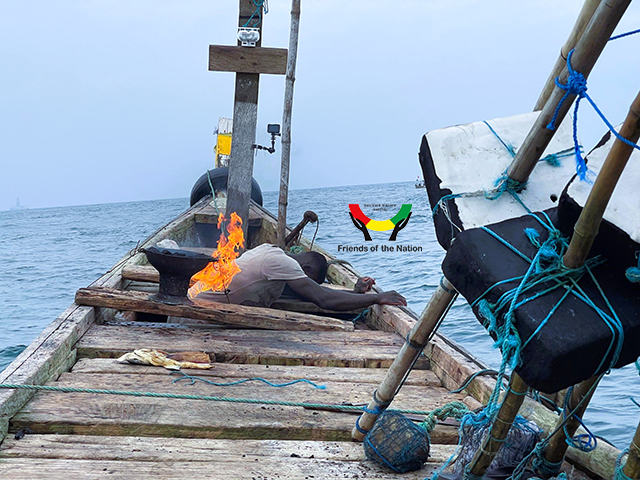
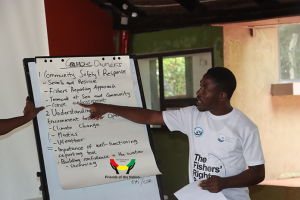
 The Improving the safety, wellbeing and Sustainability of Ghana’s small-scale fisheries, codenamed Marine SafeNet Ghana, is a collaborative initiative designed to improve safety, labour rights, and wellbeing of small-scale fishers in Ghana. the project, with funding from the International Fund for Fish Safety (IFFS), focuses on the coastal communities of Axim, Dixcove, and Shama in the Western Region, to respond to the urgent need for safer and more sustainable fishing practices in a sector that provides livelihoods for thousands of people yet operating under high risk and low protection. The project is implemented by a consortium led by ProSea Foundation (Netherlands) in partnership with Friends of the Nation (FoN, Ghana), with support from national fisher associations including the Canoe & Fishing Gear Owners Association of Ghana (CAFGOAG) and the Ghana National Canoe Fishermen Council (GNCFC).
Rationale and Context
Small-scale fisheries in Ghana are vital to food security and employment, but face serious challenges such as:
-
Unsafe fishing practices and limited access to safety equipment.
-
Weak enforcement of labour and safety regulations.
-
Declining fish stocks and economic vulnerability.
-
Limited education and awareness among fishers.
These conditions expose fishers, especially crew members—to risks at sea and onshore, with minimal social protection. Addressing these gaps requires community-based, bottom-up approaches that empower fishers and strengthen collaboration with authorities and other stakeholders.
Project Objective
The main objective of the Marine SafeNet Project is to raise safety awareness among small-scale fishers through bottom-up, community-based training in Axim, Dixcove, and Shama.
Specific Objectives
This phase of the project seeks to:
- Establish effective project management structures and partnerships in the sector
- Assess training needs and existing safety measures, while advocating for adoption of relevant safety standards.
- Develop a mechanism for collecting quantitative data on incidents and near-misses at sea.
- Deliver safety awareness training tailored to the realities of Ghana’s artisanal fishers.
What We’ve Achieved So Far
- In its first phase (Dec 2024 – May 2025), the Marine SafeNet Project has already made important strides:
-
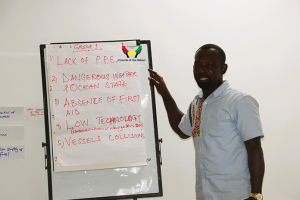
Fisher-led workshops and awareness events have created safe spaces for dialogue.
-
Journalists and local radio have been engaged to spark public conversations on fisheries safety.
-
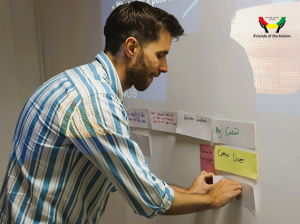
A multi-stakeholder working group is shaping new tools for reporting and addressing accidents and near-misses.
-
Fisher associations and authorities are beginning to collaborate more closely on safety and labour rights issues.
- Encouragingly, some fishers have already taken the initiative to organize peer-led sessions, showing that the message of safety is resonating and spreading within communities.
 Overcoming Challenges
The journey has not been without hurdles. Many fishers expect wider support, such as gear provision and livelihood support, beyond the project’s current scope. Women in post-harvest roles have also been underrepresented in the process, pointing to the need for more inclusive approaches in future. Despite these challenges, the project has laid a strong foundation for lasting change.
Looking Ahead
 The Marine SafeNet Project is designed for sustainability and scale-up. Its community-based model can be replicated in other fishing communities in Ghana and beyond. Importantly, the project aligns with international labour standards, especially ILO Convention C188, which Ghana ratified in 2024 to safeguard the rights of fishers. By combining local ownership with global best practices, we are building momentum toward a safer, fairer, and more sustainable fisheries sector.
Join Us in Anchoring Safety at Sea
Safety at sea is not a privilege, it is a right. Through the Marine SafeNet Project, FoN and our partners are working to ensure that small-scale fishers and their families can look to the future with dignity and security.
You can be part of this change. Support our work by: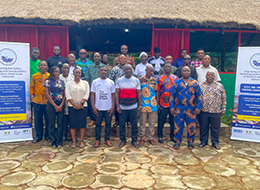
Sharing the message of safety and dignity in small-scale fisheries.
Partnering with us to scale up training and outreach in more communities.
Contributing financially to sustain and expand the Marine SafeNet Project.
🌍 Together, we can anchor a culture of safety in Ghana’s fisheries.