

The Community Environmental Monitoring and Advocacy Groups – CEMAGs are grassroots platforms established by FoN in the six oil-host districts of the Western Region: Shama, Sekondi-Takoradi, Ahanta West, Nzema East, Ellembelle, and Jomoro. The platform have since expanded to mining communities such as Ewoyaa and others where extractive projects are underway. This expansion reflects FoN’s commitment to strengthening community voices not only in the oil and gas sector but also in the governance of Ghana’s mining resources. CEMAGs are made of religious and traditional leaders, fisherfolk and farmers, women and youth leaders, media and student representatives, CBOs, FBOs, landowners, and migrant settlers. Membership ranges between 30 and 45 per district, coordinated by district-level leadership and represented at a regional level.
Through these groups, FoN ensures that communities actively participate in monitoring mining and oil and gas activities, demand accountability, and protect livelihoods and the environment.
What They Do
CEMAGs, with FoN’s facilitation, focus on:
-
Monitoring environmental impacts such as oil spills, gas flaring, marine pollution, and waste disposal.
-
Tracking corporate social responsibility projects to ensure they meet actual community needs.
-
Advocating for fair compensation, equitable revenue distribution, and stronger laws to protect the marine and coastal environment.
-
Supporting community participation in district development planning and monitoring local government revenues and expenditures.
-
Serving as local voices in national advocacy platforms, especially the National Civil Society Oil & Gas Platform.
Capacity Building and Support
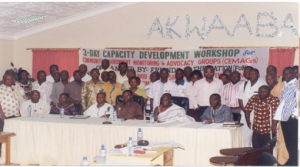
Training of CEMAGs
Since their formation, FoN has invested in building the knowledge and skills of CEMAG members in:
-
Advocacy and community mobilization
-
Petroleum policies and legislation
-
Social and environmental impacts of oil and gas
-
Tracking and monitoring oil revenues
FoN has also created opportunities for CEMAGs to engage in national and international dialogues, study tours, and networking, equipping them to effectively represent their communities.
Key Achievements
With FoN’s support, CEMAGs have:
-
Influenced national policy by submitting a memo on the Petroleum Production and Exploration Bill to Parliament.
-
Held companies accountable, e.g., engaging Tullow Oil on excessive gas flaring in Axim, which led to medical support for affected fishermen.
-
Enhanced citizen participation by facilitating inputs into district Medium Term Development Plans (MTDPs) and mobilizing thousands of community members for consultations.
-
Promoted accountability by training members to monitor district assembly revenues and expenditures, using evidence for advocacy.
-
Protected the environment through mangrove restoration, beach clean-ups, and pressing for marine pollution legislation.
-
Raised early alerts on oil-related incidents such as spills and leakages, enabling timely responses from regulators, media, and civil society.
By establishing and strengthening CEMAGs, FoN has created permanent grassroots voices that link local realities to national advocacy. They help ensure that Ghana’s oil and gas development does not compromise livelihoods, human rights, or the environment. Through CEMAGs, FoN continues to build community power for transparency, accountability, and sustainable natural resource governance in Ghana’s coastal regions.