
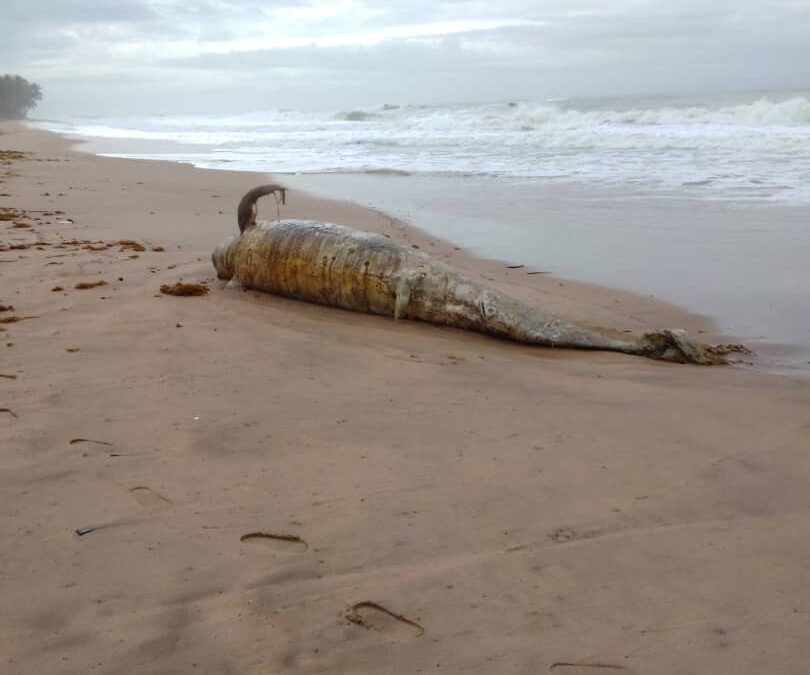
A yet-to-be-identified species of a whale has washed ashore the coastline of Akwidaa, a fishing community in the Ahanta West Municipality of the Western Region, raising calls for urgent scientific assessment to determine the species, and possible cause of death before the whale is buried according to local customs.
Friends of the Nation (FoN) is urging the Fisheries Commission and other relevant authorities to quickly assess and document the whale, identify the species, determine the possible cause of death, and collect any viable biological samples before burial.
Dr. Anita Boateng Ameyaw, Ocean Justice Coordinator at FoN, notes that “every stranding event provides a unique opportunity to learn more about these remarkable marine mammals. When such incidents are not documented before burial, we lose valuable information that could help scientists, fisheries managers, and conservationists better understand and protect cetaceans in Ghana’s waters.”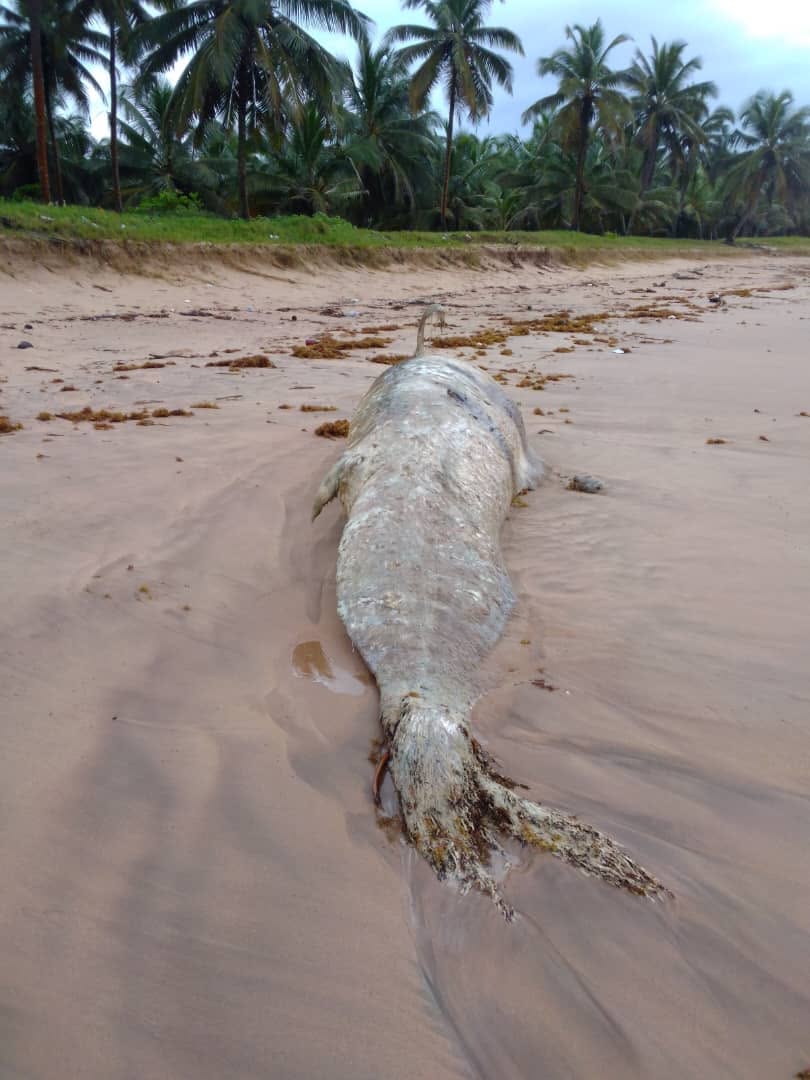
The stranding was reported by FoN’s Community Environmental Monitoring and Advocacy Groups (CEMAGs) and confirmed by the Fisheries Technical Officer stationed in Akwidaa. Community members have indicated that traditional rites are being prepared to bury the whale in accordance with local customs.
“This is a sad moment for both the community and our marine environment,” said Donkris Mevuta, Executive Director of Friends of the Nation. “While communities mourn the loss of a creature they hold in high esteem, this event also reminds us of the urgent need to better understand and protect these magnificent animals that share our oceans.”
In many coastal communities in Ghana, whales are regarded as sacred creatures and messengers of the sea. Their stranding is often viewed as a significant event that deserves respect and customary observance.
Beyond its cultural significance, the incident presents an important scientific opportunity. Friends of the Nation, the University of Cape Coast, and the Fisheries Commission are implementing Ghana’s first national real-time cetacean bycatch, directed catch, and stranding database https://cetadata.ucc.edu.gh/ (CETADATABASE), which supports marine conservation, fisheries management, and evidence-based policymaking.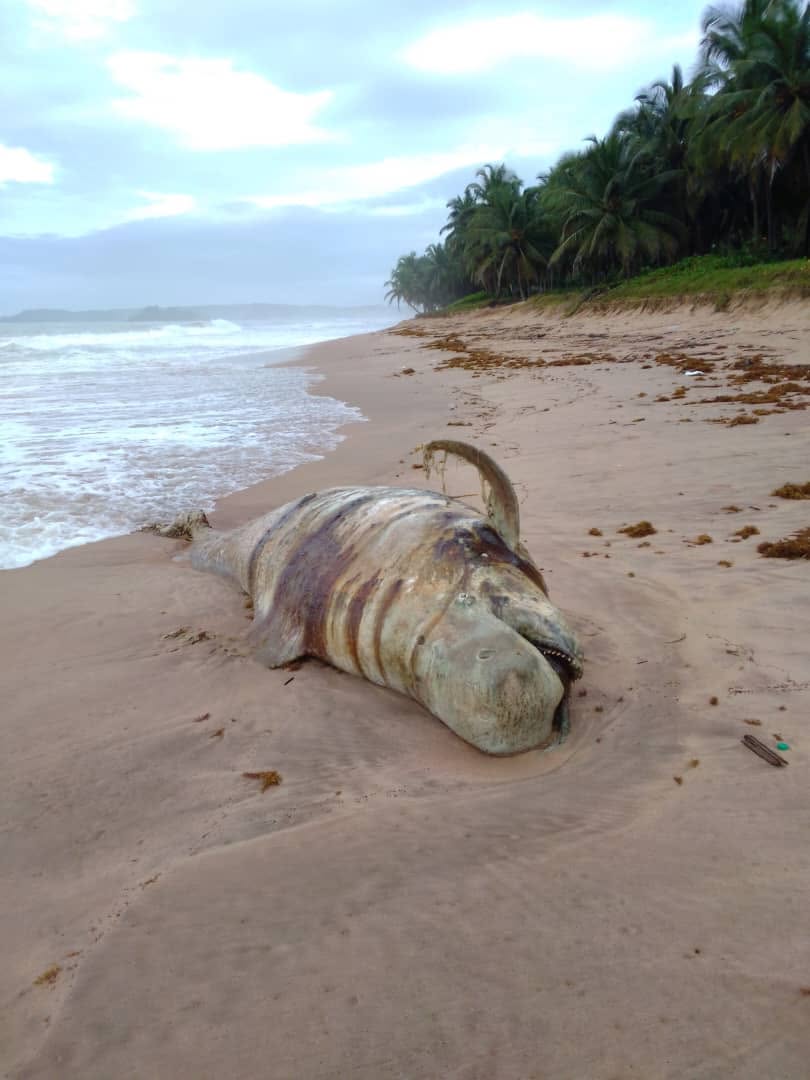
As Akwidaa prepares to bid farewell to this revered visitor from the deep, the incident serves as a reminder that every whale matters, every stranding matters, and every opportunity to learn can contribute to a healthier future for Ghana’s oceans