
Since Ghana began commercial oil production in 2010, a portion of petroleum revenues has been allocated to development projects through the Annual Budget Funding Amount (ABFA). Friends of the Nation (FoN) has played a central role in ensuring that these funds are used effectively and transparently in the Western Region, where offshore oil is produced.
FoN’s work in this area is grounded in public accountability and community engagement. The organisation partners with the Public Interest and Accountability Committee (PIAC) and other civil society groups to monitor and assess oil-funded projects in the six coastal districts, Jomoro, Ellembelle, Nzema East, Ahanta West, Sekondi-Takoradi Metropolitan, and Shama.
The tracking process involves:
-
Identifying oil-funded projects by reviewing government budget allocations, procurement data, and official development plans.
-
Conducting field monitoring to inspect the status, quality, and relevance of infrastructure financed with petroleum revenues, such as schools, roads, and health facilities.
-
Engaging communities to gather feedback on whether these projects meet local needs and deliver promised benefits.
-
Publishing findings to inform citizens, policymakers, and the media, promoting transparency and informed public debate.
Through this work, FoN has helped reveal gaps between budget commitments and actual delivery, spotlighted best practices, and called for corrective measures where necessary. This has not only strengthened accountability for oil revenue spending but has also amplified community voices in influencing how future petroleum funds are invested.
Case Example: New Takoradi Durbar Grounds
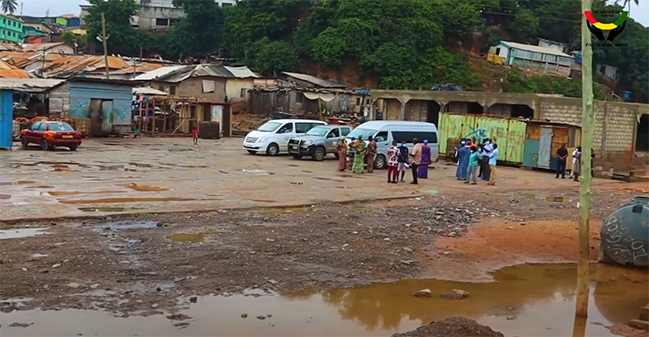
In 2020, an amount of $31,000 from Ghana’s oil revenues was allocated for the construction of a durbar grounds in New Takoradi. The facility was intended to serve as a central venue for community events and gatherings.
However, within a year of its completion, FoN’s monitoring, together with PIAC’s oversight, revealed serious structural and maintenance issues. Pavement blocks had come loose or were missing entirely, leaving uneven surfaces that collected stagnant rainwater. PIAC also observed that the structure did not meet the standard specifications expected of a public durbar grounds.
Local leaders echoed these concerns. The Queen Mother of Nyankrom attributed the poor state of the facility to lack of supervision during construction, which resulted in shoddy workmanship. This case became a powerful example in FoN’s advocacy, underscoring the need for stricter oversight, better quality control, and active community involvement in projects funded by petroleum revenues.
Case Example – Atuabo–Asemnda Road:
FoN discovered that this oil-funded road project in Ellembelle District had stalled for months, affecting transport and economic activity. Following FoN’s public reporting and advocacy, work on the project resumed, showing the tangible impact of community-led monitoring.
By ensuring petroleum funds are spent effectively, FoN helps to secure lasting development benefits for communities most affected by oil production.
By documenting such cases, FoN reinforces the message that oil wealth must be translated into durable, high-quality public infrastructure that truly benefits local communities, not short-lived projects that drain public funds without lasting impact.