
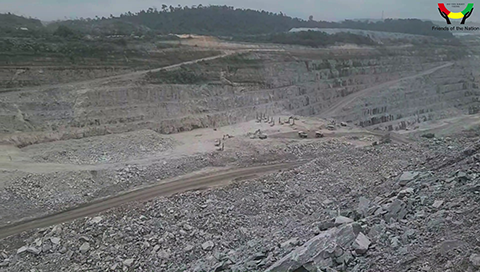
Mining activities, while economically significant, often leave behind severe environmental and climate-related challenges, deforestation, loss of biodiversity, contaminated water bodies, and degraded soils. These impacts reduce communities’ resilience to climate change and threaten livelihoods. Friends of the Nation (FoN) has been working in Ghana’s mining-affected areas to ensure that extractive operations incorporate climate-sensitive practices and that communities are equipped to advocate for their environmental rights.
1. Supporting Climate-Responsive Community Negotiations
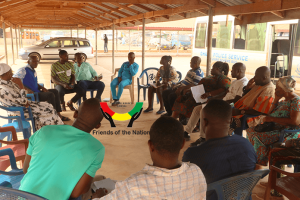
Members-of-Ewoyaa-RNC-listening-during-meeting-with-Kenyasi-RNC
FoN plays a facilitative role in helping communities engage with mining companies on issues that affect their environment and climate resilience. A key example is FoN’s support to members of the Ewoyaa Lithium Project’s Resettlement Negotiations Committee. FoN organised exchange learning visits to mining areas in Kenyasi, Obuasi, and Tarkwa, where participants observed how other communities managed resettlement, land reclamation, and environmental restoration. These visits strengthened local capacity to demand stronger commitments from mining companies for post-mining land rehabilitation, vegetation cover restoration, and climate-smart community infrastructure.
2. Community Monitoring and Environmental Accountability
 FoN establishes Community Environmental Monitoring Advocacy Groups – CEMAGS; a group of people in mining communities, who are trained and equipped with skills to monitor mining company’s environmental actions, and report to FoN and state institutions mandated to ensure environmental compliance. These groups monitor and report on
-
The progress of land reclamation and reforestation efforts.
-
Measures to reduce erosion, flooding, and siltation of rivers.
-
Compliance with environmental regulations aimed at reducing greenhouse gas emissions and protecting local biodiversity.
By providing evidence-based reports from these visits, FoN ensures that climate considerations are integrated into follow-up actions by both companies and local authorities.
3. Advocacy for Nature-Based Solutions in Post-Mining Landscapes
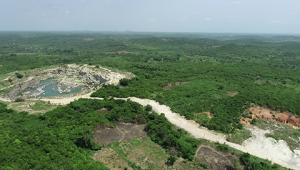 FoN promotes nature-based climate solutions—such as planting native trees, restoring wetlands, and stabilising degraded soils, as part of post-mining land use plans. These interventions not only sequester carbon but also protect watersheds, reduce local temperatures, and restore livelihoods
4. Policy Engagement
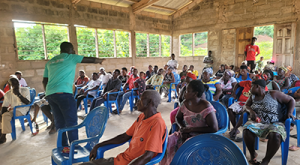 Through its advocacy, FoN calls for stronger Environmental Impact Assessments (EIAs) that integrate climate risk analysis. The organization also works to ensure that mining companies set aside funds for climate adaptation projects in affected communities, including sustainable water systems, flood control structures, and renewable energy installations.