
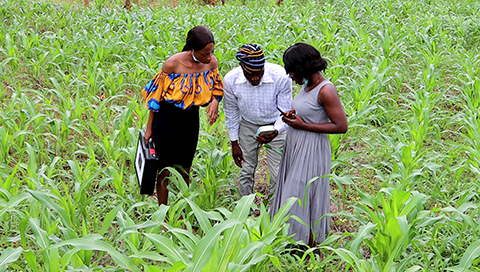
Agriculture sustains millions of livelihoods in Ghana, but climate change is making farming increasingly unpredictable.  Rising temperatures, shifting rainfall patterns, prolonged droughts, flooding, and land degradation are placing pressure on smallholder farmers and threatening food security. Friends of the Nation (FoN) recognises that climate-smart agriculture is not just about adapting farming methods, it’s about protecting entire food systems, safeguarding farmlands, and engaging the next generation in environmental stewardship.
FoN’s climate interventions in agriculture combine land protection, food system planning, youth engagement, and farm-level innovation. Three flagship actions illustrate this approach:
- Food Shed Analysis in Shama District: FoN mapped where food is grown, how it is distributed, and where vulnerabilities exist. This helps local authorities and farmers strengthen local food security and reduce reliance on imports with high carbon footprints.
- Youth Climate Awareness through Art:
 In partnership with Shama Senior High School, FoN supported students to create murals showing the impacts of climate change and the importance of environmental protection. These artworks are not only educational but also inspire peer-led advocacy.
 - Campaign Against Destructive Clay Mining: FoN has opposed clay extraction along the Cape Coast–Takoradi highway in Shama District, where fertile lands were traditionally used for short-term crops like vegetables. This campaign protects productive soils, preserves local food supplies, and prevents environmental degradation from erosion and flooding.
- Restoring Soil Health as a Climate Adaptation and Mitigation Strategy
Healthy soils are critical for climate resilience, they retain water, store carbon, and support nutrient cycling. FoN improves soil health by:
- Introducing Soil Testing Technologies:
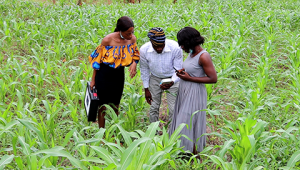 Farmers use portable smart soil testing kits to determine nutrient needs, preventing unnecessary fertilizer use and reducing emissions.
 - Promoting Organic Soil Amendments: Training in compost tea and manure application restores fertility naturally.
- Encouraging Conservation Practices: Mulching, cover cropping, and minimal tillage reduce erosion and enhance carbon storage.
- Promoting Low-Carbon Agricultural Technologies
To reduce greenhouse gas emissions from mechanization, FoN promotes:
- Solar-Powered Multi-Crop Threshers: First operational in Ejura under the FoN and EU-funded ReDIAL Project, these machines process grains without diesel, lowering costs and post-harvest losses.
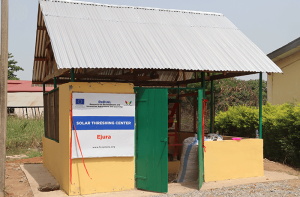
Through community demonstrations, farmers see the economic and environmental benefits firsthand.
- Linking Climate Action to Market Opportunities
FoN ensures that sustainable farming is also profitable by:
- Supporting farmer cooperatives for collective marketing.
- Encouraging climate-resilient crops like drought-tolerant maize and cowpea.
- Linking producers to buyers committed to sustainable sourcing.
- Impact and Emerging Lessons
- Food shed planning is now guiding local food security strategies in Shama.
- Youth-led murals have strengthened climate awareness in schools and communities.
- Land protection campaigns are safeguarding vegetable-growing areas from mining threats.
Looking Ahead
FoN plans to:
- Establish community soil health monitoring teams.
- Expand renewable-powered farm equipment demonstrations.
- Integrate climate risk mapping into planting decisions.
- Scale youth-led creative climate advocacy.