Campaign for the Establishment of a Marine Mammal Rescue, Research & Necropsy Centre
Every Marine Mammal Has a Final Story to Tell. Ghana Must Not Let It Be Buried.
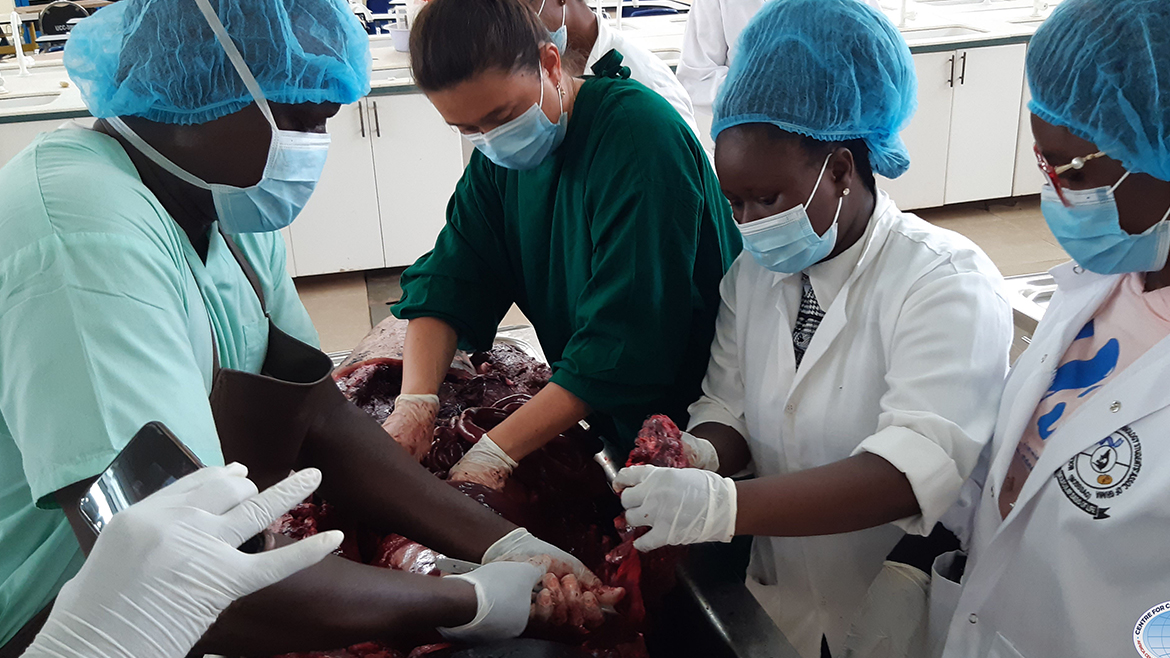
When a whale, dolphin or manatee washes ashore along Ghana’s coastline, it presents a rare opportunity to understand the health of our oceans. Yet in most cases, stranded marine mammals are buried, disposed of, or subjected to traditional rites before any scientific examination is conducted. Without necropsies; the animal equivalent of a human autopsy, the causes of death remain unknown, and invaluable evidence is lost forever.
This longstanding practice means Ghana misses critical opportunities to investigate whether marine mammals died from fishing gear entanglement, ship strikes, pollution, disease, plastic ingestion, harmful algal blooms, climate-related changes, underwater noise, or other human-induced threats. It also weakens efforts to enforce environmental laws where illegal activities may have contributed to a marine mammal’s death.
We therefore call for the establishment of a national Marine Mammal Rescue, Research & Necropsy Centre as the country’s first dedicated facility for rescue and scientific examination of stranded marine mammals.
The Centre would serve as a national hub for marine wildlife pathology, forensic investigations and scientific research. It would ensure that every stranded marine mammal becomes a source of knowledge to improve conservation, fisheries management and ocean governance.
The Centre should:
- Conduct necropsies to determine the causes of death of stranded marine mammals.
- Collect and preserve biological, genetic and tissue samples for research and long-term monitoring.
- Screen for diseases, parasites, toxins, heavy metals and microplastics.
- Investigate evidence of bycatch, entanglement, ship strikes, pollution and other human impacts.
- Support forensic investigations where illegal activities are suspected.
- Maintain a national biological sample repository (biobank) for future scientific research.
- Produce scientific reports that inform marine conservation policies and fisheries management.
- Provide laboratory support to the Ghana Marine Mammal Strandings Taskforce.
- Train veterinarians, marine scientists, fisheries officers and students in marine mammal pathology and necropsy techniques.
- Collaborate with regional and international research institutions to strengthen marine mammal conservation in West Africa.
The Centre should bring together expertise from:
- Veterinary Services Directorate
- Fisheries Commission
- Wildlife Division of the Forestry Commission
- Environmental Protection Agency (EPA)
- Ghana Maritime Authority
- Universities, including the University of Cape Coast, University of Ghana, Kwame Nkrumah University of Science and Technology (KNUST)
- Ghana Health Service and public health laboratories where disease surveillance is required
- Marine scientists, veterinarians, pathologists and laboratory technicians
- Civil society organisations, including Friends of the Nation and other marine conservation organisations
- International marine mammal research institutions and conservation partners
The Centre should include specialised facilities for:
- Necropsy and post-mortem examinations.
- Histopathology, microbiology and toxicology analyses.
- Sample preservation and cold storage.
- DNA and genetic analysis.
- Digital documentation and imaging.
- A national marine mammal specimen and tissue archive.
- Training, research and public education.
Establishing a Marine Mammal Necropsy Centre would transform Ghana’s response to marine mammal strandings from one of disposal to one of discovery. Instead of losing vital evidence through immediate burial or disposal, Ghana would build the scientific capacity to understand why marine mammals die, detect emerging threats to ocean health, strengthen environmental enforcement, and generate evidence to support national and regional conservation efforts.
A Marine Mammal Necropsy Centre is more than a laboratory, it is an investment in science, biodiversity conservation, sustainable fisheries and the future health of Ghana’s marine ecosystem.
Every Necropsy Reveals Evidence. Every Discovery Protects Our Oceans. It is time for Ghana to establish a Marine Mammal Necropsy Centre.