
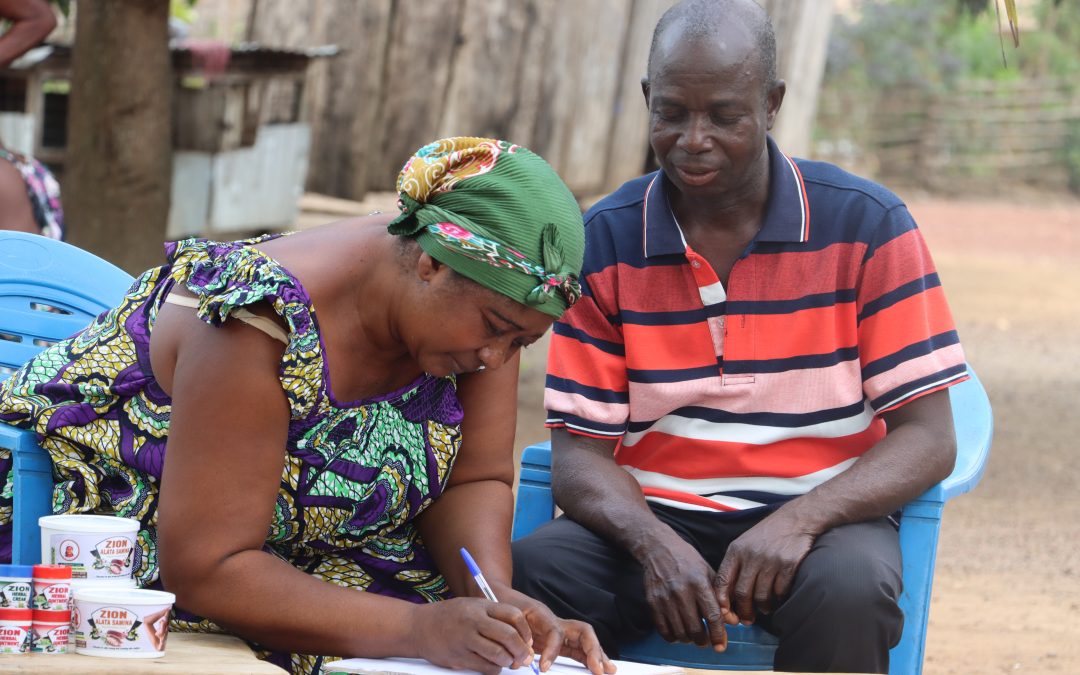
Until recently, Mr. and Mrs. Nkrumah, a couple at Dadieso in the Suaman District, have lived on farming all their life. Unfortunately, in 2021, the cocoa crops which served as the single and main source of income for their household died due to soil fertility deterioration and climatic change. With limited funds to secure a more fertile farmland and start from scratch the cocoa farming, the couple resorted to the preparation of herbal medicines for income, while still cultivating food crops for subsistence. However, the income from this venture was highly inadequate to sustain their household. While low capital, poor branding and marketing of the products limited the income generated from the business, lack of financial planning and impulse spending affected the proper utilization of the income. This, together with the financial demands of their household members resulted in financial distress, declining business capital, and mounting debt.
 But in 2022, Mrs. Florence Nkrumah began a journey of economic empowerment and transformation when she had the opportunity to participate in trainings on entrepreneurship, gender responsive skills training and transformational leadership organized by the WEACT Project. The series of trainings exposed her to the importance of livelihood diversification and multiple streams of income, as well as, proper business management strategies, financial planning and savings. They also participated in the training on cocoa velarization for soap making.
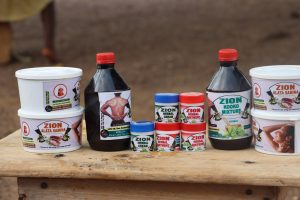
Leveraging Mrs. Nkrumah’s fresh insights, the couple revived their “dying herbal medicine business” by adopting improved business management practices. They began to plan their finances by preparing budgets and market lists for all their purchases. The couple also rebranded the products with new labels, improved customer relations, and conducted intensive marketing by visiting new communities and market centers to advertise the products. These helped to expand their customer base and sales. Additionally, the couple joined two Community Savings and Loans Association, where they saved money weekly. With their first cycle of savings, the they paid off their debts and increased the business capital, enabling them to stabilize their finances.
 Despite the improvements in their financial situation, there remained challenges with meeting the basic needs of their household members. Thus, the couple explored opportunities to increase their income and secure their financial future, but were constrained by lack of capital. Fortunately, in 2023, they benefited from a grant support of GHS1000 from WEACT which empowered them to start a soap production business, utilizing the skills acquired from the cocoa velarization training. Although the venture is still in its infancy, the immediate outcomes show prospects for boosting their household income. The couple are excited about the venture and the impact of WEACT on their income and livelihood in general. Mrs. Nkrumah narrated “…Thanks to WEACT, we are now debt-free and financially stable. With the soap business, we are hopeful for a better financial future. We have done two rounds of production and have so far made a profit of GHS200 on the capital. With the remaining inputs, we anticipate a profit of about GHS1000. Aside the profits, our household no longer spend on soap, saving us about GHS100 monthly which is redirected towards other household needs. We are happy and less stressed about money now…”.